Showing posts with label gear reviews. Show all posts

Monday, 16 January 2012

the north face tent mule III down slippers

I tend to run cold, and my feet are a major point of sufferance at this time of year, which is why I was disproportionately ecstatic to be sent a pair of North Face down slippers to test this winter.

I’ve had a set of cheap down booties for a while that I bought in Aviemore one particularly cold winter climbing season when I was staying up in one of the SMC mountain club huts – the kitchen was so cold at times we found that opening the fridge actually started to warm the place! Hence I’m well aware that down footware is utterly fabulous.

The biggest disadvantage that my old booties had, was that due to the cheap quality of the down and the fabric construction, walking around used to leave a light trail of feathers everywhere, and occasionally you’d end up poked in the foot by the sharp end of a small feather or two. Quite irritating I must say.

The North Face Women’s NSE Tent Mule II Down Slippers (what a mouthful!) are incredibly well constructed though, and in a good couple of months of wearing them pretty much everyday in the incredibly poorly heated ‘shed’ we call home in deepest, darkest, rural mid-Wales, I’ve not had one tiny bit of down escapage, not seen any holes start to appear (that’s even despite multiple small kitten attacks!) and still love wearing them when I want nice comfy feet!

tentmulekitten Claire was inspecting the Tent Mules – think she was relieved to be let off the hook for my ‘kittens for slippers’ campaign…

Ok, here’s what Webtogs say about these little foot-shaped bundles of joy:

The North Face Women's NSE Tent Mule III is a women's specific down slipper designed to keep your feet warm, comfortable and dry after a hard or easy day, these Tent Mule's are like sliding your feet into two clouds - that's the only valid comparison that I can think of to do them justice.
However on the other hand the North Face Women's NSE Tent Mule III slippers are pretty hard core with a toughened upper to prevent any damage if you do have to go scrambling around your log shed or skidding across the ice to grab the post. The tent mule's are water resistant and highly durable with a grippy sole to stop you slipping on any polished surfaces and tent floors.

  • Durable, water resistant, element shedding 100% recycled PET upper
  • 450 fill power down and feather insulation
  • Die-cut EVA sock line
  • Highly durable nylon mesh base with rubber fine mould traction lugs
  • Weight: 96g (I would assume this is per slipper)

Blue! Shiny, shiny lovely blueness! They do come in a range of other lovely colours, and men’s varieties too.

I’d just like to say, having spent a deal of time with my head, feet, and indeed my entire body up in the clouds at all manner of angles and speeds (remember of course I’m an aerobatic pilot as well as a mountaineer), that putting these slippers on is in fact nothing like ‘sliding your feet into two clouds’ – it is in fact a far warmer, drier and altogether more pleasurable experience!

Size-wise, I wear a UK size 4 in most shoes, and the XS slippers are perfect for me – so I’d suggest that the size guide is about right on the Webtogs site (3 – 4.5 go XS. 5 – 6.5 go S, 7 – 8 go M).

I can confirm that the bottoms of these do have some surprisingly grippy little lug things that have not as yet seen me face or butt first onto the slippery kitchen floor or icy patio, nor have the bottoms ripped or sustained any damage more than now being a touch mucky, despite me being less than careful running around outside up and down the muddy lane outside on occasion. I’m sure the postman thinks I’m a lunatic by now – this mad woman running up and down the lane wearing a big baggy jumper and bright blue down slippers! Still, appearances can be deceptive eh?

So what do I really think of these? Well of course, I love them. They’re light enough and squish down small enough to constitute a justifiable camp or hut luxury in the colder weather, are well-built and hard wearing enough to take extended and constant abuse, come in a funky selection of colours, look cool and above all keep your feet comfy warm! I would advise wearing socks inside them whenever you can though – otherwise you will end up with a bit of skanky, sweaty feet syndrome, so avoid the pong by lining your feet with some snuggly socks.

They could be considered a touch on the expensive side for general purpose slipper use (currently £26.90 from webtogs), but when you consider that these are in fact really nicely made pieces of tough, down-filled outdoors worthy kit, I wouldn’t begrudge the price one little bit. Honest.


Links:

My blue slippers: http://www.webtogs.co.uk/The_North_Face_Womens_NSE_Tent_Mule_III_Down_Slippers_103011-24896.html

Lots more down foot-shaped goodness: http://www.webtogs.co.uk/Down_Slippers/

Monday, 24 October 2011

‘not for girls’ the deuter race x air 14l pack

Wow I’m such a slacker! I’ve had this bag for ages now and am only just getting round to writing the review. Slap my wrists Webtogs!

Anyway, what do we have this time? Basically having run out of things I really wanted to try out camping/walking/climbing wise, my mind was instinctively drawn to kit that could be used for my other main outdoor hobby (no, not aerobatics) – mountain biking.

The Deuter Race X Air is a lovely looking piece of kit – a very simple, 14l hydration system compatible rucksack, designed primarily with cyclists in mind. Idea for longer days out on the mountain bike where you want to carry a waterproof and some sandwiches in addition to all the regular kit you carry on a short trail centre blast. In fact Deuter say this:

The Deuter Race X Air 14 L Backpack is a compact and sleek bike pack for fast and light tours.

The proven Aircomfort-System with mesh shoulder keeps your back cooler and drier.

Features

  • Front pocket with stowaway helmet holder
  • Interior valuables pocket
  • 3M reflector and attachment loop for the optional Safety Blink
  • Hydration system compatible
  • Mesh pockets
  • Weight 940 g
  • Capacity 14 L
  • Dimensions (H x W X D) 47 x 22 x 15 cm”

Deuter Race X Air 14 L Backpack

Looks nice no? I was really pleased with this pack when I first received it, although a couple of things niggled right from the off – firstly, it’s not actually that light despite being marketed as a ‘fast and light’ style bag. Over 900g for a 14l sack isn’t what I’d consider all that lightweight really, especially when you open the bag up to find that it has nothing in the way of organisational pockets or the like, despite its weight. Now, I also do like my biking packs to have stash holes for things like pumps and multi-tools, so I wasn’t overly pleased to find this minimalist open void that just swallows everything you throw at it – however I was impressed at just how large this thing does seem to be inside and how much kit I managed to fill it with – it’s certainly big enough for a summer day-ride, although you might want something bigger in winter if you’re carrying insulation layers and the like.

Secondly, despite often being marketed as a hydration pack, this bag does not come with a hydro pouch. This wasn’t a big problem for me as I already have several, but if you’re looking for a full hydration pack system bear in mind this one doesn’t come supplied with a pouch. (I tested both a 2l Source roll-top pouch in this and a Nalgene 2l screw-cap pouch, both of which fitted fine – I also don’t see that there would be any issue using a larger 3l pouch if you wanted to).

Thirdly, it seemed to ride up my back somewhat when I rode with it – walking or even running with it were mostly ok, with the large gap in the vented back system meaning this was the only bag I’d ever used that hadn’t made my back sweat. Sadly none of the niceness of having a sweat free back actually matters when you find yourself hurtling downhill and unable to move your head back properly to see because your bag has ridden up and the stiff back system is now digging into the back of your neck…

It was after that little ‘incident’ that I swapped bags with my riding partner Matt and swore (quite profusely) that I never wanted to see the Deuter again. A shame really, but for me a biking pack that interferes with your head movement is an absolute no no. Don’t necessarily let this put you off though – please read on.

Matt (aka @carriedcarpet for all you Twitter types), being a different shape to me (I am an ‘average’ slim woman, he is a slightly taller, trim but athletic male) seemed to have none of the back issues I did, and hence the next glowing part of the review is from him:

“Not for Girls.

Some people spend their weekends with their girlfriends or their wives, visiting national trust properties, cafes and random events or beer festivals. I spend my weekends with Ingrid, a feisty German girl who is super quick, but also rather unforgiving. Ingrid is my cross country hardtail and before you all feel sorry for me I have to say that I see myself as one of the lucky ones, my bike doesn’t bestow me with in laws and though she throws me off at the slightest sign of cockiness, lack of commitment or skill, she rewards my passion and effort with the pure thrill of speed . The sheer concentration of a long technical downhill gives an almost meditative effect, removing the strain and tension of a hard week at work (that is, when I don’t fall off her in which case I often end up face down in a stream...)

So to the matter at hand, Laurens Deuter Race X Air running and biking pack. I usually use another brand of biking/hydration pack (think humps and deserts) so I was keen to do a swap on a ride around the black run at Llandegla Forest (which it should also be noted is the home of one of the best bacon sandwiches in Wales.) From the off the mesh back system fitted well - this isn’t a new thing and has been around for at least ten years, however Deuter have made something lightweight [ed. – see my earlier comments about weight] which also seems to fit my rather scrawny/athletic physique really well. As a bike pack it’s fairly minimal, with external mesh side pockets for jelly babies (or if you’re posh energy gel), a zipped front pocket and an internal divider in the main compartment to separate out your hydration pouch from the rest of your stuff. If bells and whistles are what you are after this probably isn’t the pack for you, however to my mind less is definitely more, and what this pack does is provide something simple but in a really well tailored and designed package. I took the pack running round the Ironbridge Gorge and this seemed to be where the pack really came into its own - the back system was really secure, even with 5kg of weight in it, none of the normal annoying bouncing up and down and the waist belt didn’t cause my top to ride up, luckily preventing too many tourists on Ironbridge being shocked by my bare mid riff. Some people baulk at the idea of a built in rain cover, thinking it’s best to keep essentials in dry bags, but for this type of bag it is a great feature. Having still not quite got used to people trying to run me over when running at night, pulling out the hi-vis raincover means I have an extra chance of survival when out in the dark. The other bonus is that on the rare occasions I bike to work I can transform my muddy pack into something a bit more smart and socially acceptable.

My only real niggles with the pack was that there weren’t enough clips to stop spare straps flapping around, something common to most packs and easily sorted with some elastic or duct tape. I also had a bit of a hang up about the mesh shoulder straps, they worked brilliantly and were really comfortable, but somehow they made me think about tights. However Ingrid didn’t share my hang ups, she really liked the bag and I wouldn’t dare argue with her!”

 SAM_3219

Matt and Ingrid pack testing at Llandegla, after my tantrum

SAM_3220 

So there we have it – two rather different opinions on the same pack. I didn’t find it fitted me terribly well, which wasn’t a problem whilst walking (my first excursion out with it had been a day’s bog slog in the Berwyns and I found no fault with it whatsoever, in fact I rather enjoyed using this pack as a walking day bag – however my primary use for it was meant to be as a mountain biking pack and for this it simply didn’t suit me). Matt found the bag actually fitted him really well and enjoys using it for biking, running and walking on regular occasions.


The link bit:  http://www.webtogs.co.uk/Deuter/

Sunday, 24 July 2011

nemo zor ‘hyperlight’ mat

Warning: those of a sensitive nature, and those who don’t appreciate my occasionally rather crude sense of humour, are probably best off skipping down to the first sub heading. You have been warned.

Never have I ever found writing a review of a piece of outdoor kit so difficult. And it’s not that I’ve been lacking in opportunities to test this damned thing – I’ve slept on the Nemo Zor mat on the patio outside, in a tent on rocky ground, in a tent on grassy ground, in a tent on tussocky ground, in a bivi bag and in the house (ok I haven’t actually slept on it in the house, that would be silly, but I did spend a while laying on it).

SDC13332

My first Zor arrived in the post and thus I dutifully unwrapped it, keen to see what all the fuss was about. For a self-inflating mat the Zor certainly is light and it really does pack down incredibly small – so far so good, this was exactly what I was wanting…

I unrolled the bright yellow coil of mat onto the kitchen floor, taking note of the neat little stuff bag and the even neater velcro strap that Nemo supply for storing it (the strap is an especially nice and useful touch), I also laid aside the little packet of repair patches…

“Great! It’s huge!” I thought to myself as I admired my latest sleeping partner lying flaccid at my feet. Unfortunately I was to be bitterly disappointed a short while after I started to blow…

I really like the valve that Nemo are using – it’s a little bit like those child-proof lids you get on bottles of medicine, in that you have to push to unscrew or screw the thing up tight, but this cunningly means that you can simply push the valve closed between breaths, without having to tighten it up. A nice touch I thought.

“Mmm, it’s firming up nicely now”, was my next thought as I gently blew, my lips tightly sealed around the reassuringly solid valve stem. I decided to keep going, pumping until it felt really hard between my fingertips…

I like to think I’m a pretty accommodating sort of girl, willing to put in a degree of effort in order to see results. Unfortunately, no matter how strong the desire, sometimes things just don’t work out. Sometimes you will get let down…Basically, whilst inflating the mat out of the packet for the first time, one of the sections where there is a cutout in the insulating foam had allowed the two halves of the outer layer to stick together (being vacuum packed probably hadn’t helped). After I’d inflated the mat and proddled the stuck-together part, the dissolution of the union had lead to a tiny tear forming in one side. I didn’t really notice this at first, but upon attempting to sleep on the thing outside that night, it became readily apparent that I was going to have to dump my latest partner – he was a complete let down in the [bivi] sack.

Ok, in all seriousness, I wasn’t mightily impressed to find a brand new product managed to damage itself like that when I inflated it. I would have happily stuck one of the supplied repair patches on and made do, but upon looking at the patch kit I realised there was no glue supplied (I’m not marking Nemo down for this mind), and I had nothing that would do the job, so the mat went back and was replaced with another identical Zor, which happily did not self-puncture itself (well done Webtogs, great service as usual!) and the proper testing could begin at last.

The Specs

The Zor is wonderfully light, in fact I believe it is actually the lightest mat of its type around at the moment – an impressively small 405g for a full-length self-inflating mattress. I believe it’s closest rival is the Therm-a-Rest Prolite which weighs in at 460g for the ‘regular’ size (183cm long, same as the Zor).

It also packs down pretty damn small – only fractionally bigger than my friend’s Neo Air (which is an entirely different type of mat altogether anyway, but I digress).

SDC13510

Yes, before you ask, the bottle of wine was indeed the best thing to use for a size comparison. Please note I’ve made no real effort to compress it here either – just rolled it up quickly and whacked the strap round, it will go smaller if you really try

Nemo also make a short version of the Zor, which is obviously considerably lighter again, at 285g for a mat length of 122cm (so between 1/2 and 3/4 length depending on how tall you are).

The Review

Is it light?
Does it pack down tight?
Did I sleep alright?
Did it set the tent alight?
Was the price right?

I’ve already mentioned that the Zor is impressively light for what it is and it packs down lovely and small – both elements that make it ideal for lightweight backpacking use, and also adventure racing type stuff (unless you’re super hardcore and use bubblewrap or something daft like that). I used the Zor in the Saunders Lakeland Mountain Marathon a few weekends ago where I was really impressed at feeling able to carry a full length mat and be relatively comfortable, whilst still managing to remain within my own self-imposed pack weight and size limits.

IMAG0167

That said, the ‘did I sleep alright’ element does need some discussion. No, I didn’t sleep alright during the SLMM, but that was nothing to do with the mat – my badly sprained ankle and seized up knee meant that I just couldn’t sleep because of the pain. The other times I’ve used the Zor have always been in a more relaxed ‘backpacking’ type environment, so either in a bivi bag or in a tent, and whilst it’s been ok and I have managed to sleep on it, I can’t say I’m in love with the Zor if I’m brutally honest. It’s just too thin – you have to inflate it to be really quite hard, otherwise you tend to bottom out through it, and the solidity required in order to not bottom out is almost as hard as the ground would be anyway. But of course you are being insulated, and on grass the discomfort levels are significantly reduced. It could just be that I’m getting soft – my lovely thick heavy duty therm-a-rest just feels so much more plush (but then it would do – it’s much thicker and much heavier).

Ok that was a load of waffle, I must apologise. I have mixed feelings about this mat – most of the time I’d like to be more comfortable and would probably choose to carry something thicker and heavier, BUT for the times when weight, and more importantly for me, pack size are critical, the Zor is actually fine – the only thing beating it being the ultra uncomfortable but effective custom cut down 3/4 length closed cell foam mat I use on Alpine climbs.

Did it set the tent alight? A bizarre question you might be thinking. ‘What on earth does she mean? Is this some kind of deep spiritual introspection or something?’. No. It is a very literal question, that has only been raised after an alarming incident in a tent on the summit of Cadair Berwyn…

Seeing your world suddenly lit up bright blue when you move any part of your sleeping bag across the surface of your camping mat, is a some what shocking experience (pun fully intended). I’ve never seen anything like it, honestly – it was mad! I could slide up and down (imagine rubbing a balloon on your jumper to make your hair stand on end), then move my fingers close to the mat’s surface and there would be huge bright blue sparks of static arcing everywhere! Super fun, but not a little disconcerting. Admittedly I haven’t recreated the experience yet – I’d been waiting and hoping to make a short video but haven’t quite gotten round to it. I just hope that you can’t set fire to a down sleeping bag using the static electricity generated between it and the mat…(I had been wondering where the name ‘Zor’ had come from, and I can’t help but think it’s quite apt considering the product’s electrifying nature).

(No, it didn’t actually set the tent alight, but it was certainly a bizarre sight.)

Finally, is the price right? Well that all depends on what you’re willing to pay for what is actually the lightest, full-length, self-inflating sleeping mat of this type available on the market. Frankly I think the price is fine and well in line with everything else out there (£79.99 at time of writing).


All in all the Zor is a great bit of kit, far more comfortable than a closed cell foam mat, light weight and packs down lovely and small; just don’t expect 5* luxury – at only 2cm thick there is a definite knack to getting the comfort level right, and some people may well find it just too thin to ever really get a comfortable night’s sleep. I like it though for the most part, and I will continue using it whenever I don’t want the extra weight, bulk and hassle of my old squidgy therm-a-rest.


The link bit

You can buy the Nemo Zor from Webtogs here: http://www.webtogs.co.uk/Nemo_Zor_Hyperlight_Sleep_Mat_102969.html

You can browse other mats here: http://www.webtogs.co.uk/Inflatable_Sleep_Mats/

Monday, 13 June 2011

snug as a bug: the western mountaineering ultralite sleeping bag

in a very expensive sleeping bag.

Normally, I’d resent the idea of having to pay for a product that someone is wanting me to go out of my way test and then spend hours writing a review of. In some cases however, chipping in toward being given something truly special really is worth it, even if you are as tight as I am (Scottish blood? Sorry Dad…)
Back before January’s life changing house fire, I had a choice of two sleeping bags that I could use – one a lovely Marmot Pinnacle, given to me by the man who designed it (it’s a long story that I’ll only tell if you manage to catch me in the pub and buy me a pint), and the other an Alpkit Pipedream 400 I’d bought to use on Alpine climbs because it was light and packed down tiny. I’ve also used all manner of cheapo Sleeping bags over the years, but absolutely nothing I’ve ever used has come close to comparing to the new love of my life – the Western Mountaineering Ultralite.
The quality of this bag really does merit a better testing than I can really give it at this time of year – it yearns to be taken out in the cold of the autumn and winter. Camping in the snow, all snuggled up inside, surrounded by a gorgeous cocoon of stupendously lofty down? Definitely what the Ultralite is begging me for. Unfortunately in that regard, we are currently in what counts as the British summer, but of course, being in Wales means that actually, the ‘summer’ weather can be pretty atrocious and at night it can still get pretty cold. The bag has now had what I consider to be a semi-reasonable testing in areas as varied as my attempt at riding the Trans-Cambrian way (where it sat taking up very little room in the bottom of my riding rucksack), to just sleeping outside the house in a bivi bag as I was watching the owl babies learning to fly, to tent camping on a very cold night near the summit of Cadair Berwyn, amongst others. I’d still like to come back to this review once the bag has seen some winter or Alpine action, but for now here is my review.
Spec list
Price
Currently (12/06/2011) £323.99 from Webtogs unless you’re a short-arse like me, in which case they will let you have one of the Short length ones for £314.99.
Features
  • 454g of 850+ fill high loft down (425g in the Short one)
  • 3D down baffle behind zip
  • Full down collar
  • 5 inch loft from finest goose down filling
Tech Details
  • Short length weight: 790g
  • Standard length weight: 820g
  • Long length weight: 870g
Temperature Rating
  • 20°F / -7°C Now, this is the controversial one, and I’ve simply quoted what W.M. have quoted on their website. I will comment later on about just how warm I think this thing really is and where/when I’d be most happy to use it (my own ‘real world’ opinion, as temperature ratings of sleeping bags really are pretty unhelpful in all honesty).

For a little background information, I actually spent last Friday up with the guys at Beyond Hope – the UK importer for Western Mountaineering (amongst other brands), admittedly on unrelated business, but, I did have the opportunity to have a proper discussion about W.M. bags, their construction techniques, the quality of the down they use, the testing they do, and why people rave about them. I’m not going to go into everything on here, but one thing I will mention is that the quoted 850+ fill-power down used in all of the W.M. bags, may actually be more like what we usually know as 900 fill-power – of the same quality as the very best stuff that manufacturers like PHD use (for anyone unfamiliar with the name PHD, go look them up – they are the home of UK made custom sleeping bags, jackets and other insulating products of the highest quality and practically much an institution in Climbing and Ultralight circles. My comparing W.M. with PHD is nothing but a massive compliment to both companies).

SDC13345
Field testing, always a hardship. Keep your eyes open for the review of the Nemo mat I’m lying on here later on too…
W.M. have produced a fantastic page on their website outlining the features of their sleeping bags that really deserve to be noticed, which makes my life easy as I can just direct you to the link and then simply comment on the elements that I really liked and feel I should draw attention to.
SDC13341
“You look like a worm! A giant, blue, poofy, snuggly worm!” I think I’ll take that as a compliment…
The important stuff and my opinions
  • Loft. The first thing you notice about the Ultralite, the moment you pull it out of it’s fluorescent green cotton storage bag (yes, I did say fluorescent green), is just how much it lofts, instantly. In all honesty I’ve never seen a bag quite like this, even after it had been crammed into a stuff bag for a couple of days, upon pulling it out in a matter of mere seconds it will have re-lofted back to being possibly the snuggliest thing I’ve ever seen.
  • Weight. It’s light. Really light. And it packs small. This bag is made from some of the highest quality down money can buy, and some of the lightest, most down-proof fabrics you can find. The warmth-to-weight ratio of this thing is simply phenomenal. If anyone can find me a bag to beat this in terms of warmth-to-weight, please let me know as I’d absolutely love to see it. This will be my go-to bag for pretty much everything now, all year round. Admittedly, in the depths of winter I’ll probably need to be layered up inside it (being a girl who suffers the cold), but for 95% of what most people would consider ‘three season’ use I’d be more than happy in this (and I’ll use it in all four seasons).
  • Fabric. W.M. also use a fabric that is impressively down-proof. Normally with a down bag, you open it up and inside you’ll inevitably see a few bits of rogue down floating around having leached through the fabric or the seams. There are far less escapees in this bag than with any other I’ve seen (Marmot, Alpkit, Rab, Mountain Equipment…). 
    The fabric feels absolutely gorgeous next to the skin, it is positively luxurious.
  • Zip. It’s the little things that can often make or break a product, and in this case the way W.M. have presented the zip issue is nothing short of ‘shout out loud’ refreshing. Not only do you get a zip with a tag on each side (rather than one that you have to slide round to get it inside and never seems to start on the side that you want it), but they’ve laminated a strip of the fabric each side of the zip, stiffening it, thereby preventing the fabric from being pulled into the zip. Stick and snag free zippage! The bag is almost worth the price-tag for this simple feature alone in my opinion.
  • Construction. There is some clever stuff going on here with what Western Mountaineering call a ‘Differential Cut’ in the main body of the bag:
    “Its purpose is to give the inner shell a smaller circumference than the outer shell. This eliminates extra fabric inside the bag that could lead to cold spots. All of our mummy bags are differentially cut to promote proper lofting and to protect against down compression when knees or elbows push against the inner fabric.”
    They also build in what they then call a ‘Reverse Differential Cut’ in the hood of the bag:
    “Our hoods are cut so that the inside of the hood is made with a larger piece of fabric than the outside. This creates a hood with loose down filled fabric which surrounds your head. That way you can can enjoy warm insulation around your head and face without having to cinch the hood tight. Also, the extra fabric can be adjusted to create a down filled ruff or bill across your forehead.”
    Both of these work – cold spots are much reduced around joints when you stretch and move, compared with a more conventional bag construction, and the hood is indeed wonderfully snuggly without necessarily having to do up the drawcord (which is something I absolutely hate having to do – having a small circle to breath through and a cord pressing into my face really doesn’t feel great).
    SDC13349
Conclusions
In short, I think this sleeping bag is one of the best and nicest pieces of outdoor kit I own. It’s not something I would ever have considered buying had I not been offered the testing gig as it’s a cut above my normal sort of price operating range, even for high level equipment. However, now that I’ve experienced what the top end actually buys you, I’m not sure I’d ever feel happy buying a ‘lesser’ bag now. The quality of design and construction is impeccable, I have found absolutely nothing whatsoever to criticize in this sleeping bag (and you all know by now that I’m particularly anal about things that annoy me or are what I consider to be sub-standard).
It’s light, incredibly warm, supremely comfortable, fits me like a dream (I could wear layers inside if I wanted to) and actually makes me want to find excuses to use it. The simple genius of the reinforced zip strips mean the zip hasn’t even bugged me by getting stuck as they inevitably do normally. The draft tube that covers the zip is squishy and lovely (so basically it’s full of down and actually really works), as is the neck baffle. The foot has extra down in it so I’ve managed to even get away with not needing my socks on inside it (a first!). The drawcords work, the storage and stuff bags are adequate (although I choose to transport the Ultralite inside a lightweight roll-top dry bag to protect it), and it isn’t even a bad colour!
The only down-side is the >£300 price tag, but in all honesty, with the amount of care, attention to detail and the level of component and construction quality there is just no way I can argue that the cost should be less – this bag is worth every penny. It’s available in three different lengths and anyone of a slightly broader build than me could also look at the Western Mountaineering Alpinelite, which is essentially the same bag as the Ultralite, just with a wider cut!

The link bit
Other down sleeping bags, including others from Western Mountaineering: http://www.webtogs.co.uk/Down_Sleeping_Bags/
Western Mountaineering’s homepage: http://www.westernmountaineering.com/index.cfm

Tuesday, 26 April 2011

the crux of the matter: reviewing the crux ak47 rucksack

SDC12877

Before I begin I would like to offer my thanks to Justin for his company, patience and fabulous photos, Adam for putting up with my faffing and also to Gareth for an amusing evening in good company – the process of gear testing is certainly an arduous one ;-)

I’ve been rather busy of late, although thankfully many of the things I have been busy doing have allowed me to take my Crux AK47 pack (very kindly sent to me by Webtogs after the success of my previous Silva compass review), out in a variety of states and in a variety of weather conditions in order to form my opinions for this review.
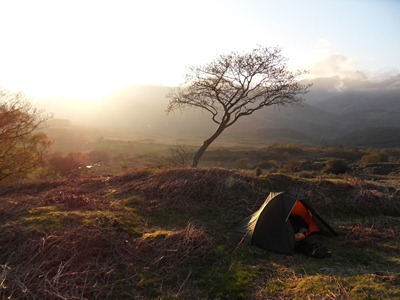
Wild camp with GarethGood grief, kit testing is tough

My trusty old Berghaus Arete has certainly seen better days, and after several days out in the wilds of a very wintery Scotland this season, with heavy loads of ropes, ice axes and other metallic accoutrements, I found myself swearing profusely and vowing to get myself a new pack with less worn out hip and shoulder padding. I should just mention that the dear old Arete has offered itself up to me with no reservation – life and soul it has poured into carrying my loads, shedding rain, snow, hail and the burning sunshine of the Alps. It has resisted the coarse tearing of Chamonix granite chimneys, been dropped down scree slopes, been sat on, stood on, slept on and generally done everything I have ever asked of it with not so much as a whimper or a grumble, and so it is with a degree of sorrow I find myself leaving my heavily self-modified old friend on the shelf, and picking up the shining and spritely Crux in its place.

How does one go about developing an objective opinion on a product? My thoughts on this were pretty simple in this case: I wanted to know a few critical things about it and I wanted to find out through my own experience, hence I took the pack out on the hill, lots!

  • So, firstly, is it actually big enough for all my kit?

This is an easy one. Yes, it is (95% of the time).

At a stated 47 litres this pack actually feels a fair bit bigger than my old Arete 45 and I’ve very, very rarely felt the need for anything much bigger (bearing in mind that my primary uses for a rucksack are rock, ice and alpine climbing, along with 2-3 day wild camping/back packing type trips on occasion).

This bag isn’t aimed at long distance trekking or travelling, the simple design and minimalist padding on the hip belt are very keenly pointed toward the ‘Alpine climbing’ market, where the size and lack of features are an optimal combination for most people.

  • With the minimalist design in mind, is it comfortable enough to use when carrying a really heavy load? (i.e. a full winter climbing loadout including rack, ropes, axes, crampons etc.)

This was always going to be one of the most critical questions in my mind, especially with the recent memory of one particular trip to Creag Meagaidh this winter, where I found myself brought near to tears by the pain in my bruised shoulders and hips after carrying a very heavy pack, with a very minimal and overused set of strap padding.

Looking at the AK47, and reading the manufacturer’s specification (it weighs a quite amazing 1170g apparently, it certainly feels very light for its size), I was initially left feeling somewhat sceptical that carrying anything heavier than a standard wild-camping load (as per my first test foray) could be anything other than horrifyingly painful – the hip belt is tiny and the ‘padding’ isn’t really what I’d call padding…

With these reservations in mind, I dragged my long-suffering better half out for an ‘evening stroll’ up Moel Sych. I loaded the Crux up with a variety of bits of kit, including several litres of water and a heavy duty 60m single rope, to make up a weight that ever so slightly exceeded that which I’m ever likely to carry in a winter climbing scenario. We then went for a walk up a big hill. For 3 hours (actually, 20 mins of it was 2km of very steep packless running, but I digress…)

SDC13083 Fiddling with the hip belt – takes some getting used to, but once you’re familiar with the shape it’s surprisingly comfy

One 3 hour stroll with a hefty load is hardly enough to really answer the question, but this combined with several outings carrying a whole range of loads – from a minimal highly compressed daypack type load of just a couple of litres of water and a jacket (see later for more on this), to several days worth of camping and cooking kit, to heavy ropes and climbing loads, to excessively heavy test loads, has left me really rather impressed overall. The shoulder straps are great, padding is good and the cut is comfortable – no issues there (for the record, I’m an averagely sized, slimly built female and am using a size 1 back). The hip belt was always going to be the weak point with it being so minimalist, but surprisingly, despite its lack of padding, I didn’t find it at all uncomfortable once I had gotten used to it. I’ve yet to find myself in pain or even the slightest bit bruised, which is nice. The innovative cut shape of the belt and the way the pack sits on my back means that it is actually far more comfortable to carry than I ever thought it could be.

204439_10150539456955545_863420544_17723462_6662608_oFully laden and nicely stable, and no, I didn’t fall in!

I don’t doubt that there are plenty of similarly sized bags out there that would be much more comfortable with hefty loads, but for me the Crux is absolutely fine, and of course, being a climbing pack, it is also incredibly stable to carry.

  • How well does it compress when nearly empty? (The Arete was pretty rubbish for this unfortunately)

Knowing that the AK47 carries a full load pretty well, my next question was simple: just how well does it squash?

Climbing is a great sport, but climbing with a rucksack on is nowhere near as pleasant or as easy as ‘going bareback’ – packs are cumbersome things that when badly packed, badly positioned, badly worn or just badly designed can turn a simple task into an awkward nightmare. Just imagine if you will, that you’re out in the mountains, having just spent four hours carrying a fully loaded pack of climbing gear into some remote crag in the middle of winter. The weather is less than ideal, with falling snow and a strong wind making life ‘interesting’. Your chosen route follows a deep cleft part way up the crag, with the rest of the route being an exposed icy ridge. You empty your pack at the base of the route, then commence the ritual of putting on your harness, clipping on your gear, uncoiling your ropes and tying in. Once all this is done you are left with an empty shell of a rucksack, now only containing emergency rations, a flask and belay jacket. You put it back on feeling all too aware that the last thing you want is a flappy oversized empty bag on your back, catching on every protrusion of rock in the chimney, then billowing out in the wind with its lid flapping merrily away on overly long straps, acting like a small sail and threatening to overbalance you and throw you down one side of the upper exposed ridge…

SDC13158 One very nicely compressed AK47 daysack on Striding Edge, Helvellyn

I am very happy to report that the Crux is excellent in this respect. I absolutely love the side compression strap arrangements – one strap on each side zig zags between a slide buckle at the bottom, a couple of plastic loops mid way and into a clip in buckle at the top, meaning that compressing the entire side of the bag is very simple and very easy to do, and you don’t end up with a big bulge in the middle like you do with the more regular system of using two separate straps. The strap is easily long enough to accommodate attaching a roll mat or tent on the outside of the bag should you need to do so, and is also completely removable if you’re wanting to strip the bag even further to save another few grams. The lid also clips down nice and neatly if you’re compressing the bag (as I had in the Striding Edge photo above), doesn’t flap and the bag stays neatly tucked in to your back.

Oh, and the hip belt works ok with a climbing harness on, but I usually clip it out of the way round the back anyway (actually, it would be really nice if the hip belt were removable for just this type of occasion, but I’ll let the Crux guys off seeing as the AK47 is so incredibly lightweight – a removable belt system would add a not inconsiderable amount of weight to the whole system).

SDC13074  Side compression straps (MRT radio and hydration pouch not included…)

  • Alrighty, it’s been good so far but does the AK47 have all the features I want and need, and does it have any features that I don’t want? (i.e. anything I’m going to cut off)

Anyone that knows me knows that I dislike faff. Especially when it comes to kit. I like my equipment to do its job as simply and efficiently as possible and I don’t like extra unnecessary bits of fluff – the ‘bells and whistles’ so many designers seem to think are essential nowadays. I like my rucksacks to be simple and only have bits that I’m actually going to use on them – I don’t like extra zips or pockets or pouches (unless we’re talking about my Mountain Marathon running pack…mountain running is an entirely different ball game…). I don’t like bits that flap around or get caught on things or leave me wondering what on earth they’re for or what type of narcotic the designer was on. Despite my penchant for self-engineering things, on a pack that costs over £100 I’d really rather not have to be cutting bits off and for that matter I shouldn’t actually need to be tying on extra bits of cord to make my own gear loops because the manufacturer has decided in their infinite wisdom not to actually include them on their flagship climbing pack, but rather to just give you some handy little fabric loops onto which you can tie your own…and I’m going to breathe now…

Yep, this is one faff-free rucksack, but honestly, Crux, come on – just put the bloody gear loops on.

SDC12871 SDC12874      

On the positive side, the AK47 does actually have all the other essential bits –hydration pouch pocket, ice axe loops, a water resistant zipped lid pocket (also an internal mini zipped pocket underneath the lip), rope compression strap and twin ‘bivi’ draw-cords securing the main pack (which, interestingly, are actually made of nice chunky, brightly coloured 4mm rated accessory cord. In theory they could be cannibalised and used as emergency abseil tat…but I can’t really imagine a scenario where this is ever likely to even cross your mind if I’m honest). It also has a chunky bright red haul loop that is nice and easy to clip onto gear at belays and would be equally easy to clip onto a haul line (the pack is also strong enough that you could hang it from the loop onto a piece of gear and actually stand with your full weight inside the bag – impressive and potentially useful to some people believe it or not).

There are also ski loops on each side of the pack, attached to the small but mostly adequate wand pockets (fine for walking poles, but not big enough for a water bottle), but not being a skier I couldn’t comment on how usable they would actually be.

No extra pockets, no unnecessary webbing, no big stretchy mesh pockets or superfluous lengths of bungee cord (although I may add some this winter in order to store crampons on the outside…maybe). A simple, no frills, easy to pack and easy to use rucksack – pretty much just what I’m after, even if it doesn’t come with gear loops attached and is lacking a removable hip belt.

  • How hard wearing is it likely to be?

No-one wants a bag that will come apart at the seams at the first sign of stress, or abrade through at the slightest scuff. The AK47 is an extremely lightweight pack and yet, somehow, rather than using the thin and flimsy feeling fabrics becoming popular with most pack manufacturers, Crux have managed to make this pack out of a nice hefty feeling kevlar/cordura fabric, and have even reinforced the base with a double layer. The back system is a wonderfully formed section of alloy tubing – not unlike a tent pole actually, that really isn’t going to bend or break unless you really go some and of course provides a fantastically stiff platform.

How hard wearing this pack will be and how long it will put up with my abuse is anyone’s guess, but so far it has been sat on, rained on, dropped out of cars and Land Rovers, dragged through dense woodland, gorse, brambles and partially caught up on barbed wire fences (I took it out with me on a long missing person search with the team a while ago in case you’re wondering). It has been climbed with, camped with and used for storing sharp things but is so far showing nothing more than the odd dusty mark. Time will be the real judge of course, but I have high hopes.

  • Does anything about it annoy me?

The irritation factor. No matter how good a product is, if any one element of its design irritates the user so much as to actually detract from the activity in which they are participating, then it will end up being left at home. My relationship with the Crux wasn’t love at first sight I have to admit, something just didn’t click to begin with and I kept thinking that I’d most likely end up returning to my old faithful Arete despite its somewhat battered state. I couldn’t quite work out what it was that left me with doubts, couldn’t quite pin down the niggling feelings I had, but, after a while, the more I started doing and the more I used the pack, the less obtrusive the doubts became.

I think to begin with I’d convinced myself the AK47 was going to be uncomfortable due to that minimalist hip belt, and for a long time, despite not having any pain and not being at all uncomfortable carrying it, my instincts kept telling me that it simply couldn’t be a comfortable carry. Eventually I overcame those doubts, realised that it in fact was not uncomfortable, and the bag started to become more a part of me – as it should be.

Overall, nothing really irritated me I don’t think. Ok, so the fact that I had to tie my own gear loops was annoying, but that was a one off annoyance, easily resolved.

The hip belt doesn’t have any form of retainer for the excess webbing…actually, yes, that is annoying – I hate having to tuck the ends away or tie knots to keep them from flapping all over the place. It’s not exactly a show stopper though, and when everything else about the bag has finally started to really click, I’m going to try to overlook that one little niggle (or maybe put my own loops of elastic on).

The water resistant zips on the lid pocket occasionally irritate me a little bit because they’re so stiff, but really, the advantage of them being mostly waterproof (along with the rest of the bag, as discovered on a very wet Snowdon bivi with Justin) vastly outweighs the piffling triviality of the slightly stiffer action they have over normal zips.
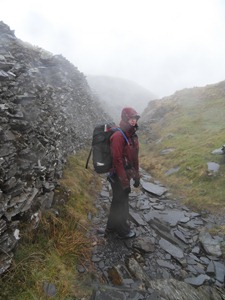
SDC12894Rain. No test would be complete without it

  • So do I like it?

Yes, I do actually really like this bag, despite the fact that at first I just couldn’t quite gel with it (and I still can’t explain why, there is just no tangible reason!). Time spent using it has convinced me that Crux’s design thoughts and efforts are ones that fit with my style of mountain-going, and also fit with my ethic – simple is always good.

221126_10150539457370545_863420544_17723470_192543_o

Anyone looking for a pack to use for climbing, scrambling or even just general heavy duty mountain use could certainly do worse than look at the Crux AK47, or any of the AK range (the smaller AK37, the extendable lid version AK47-X, or the bigger AK57 and AK70) They are all available in 3 different back sizes (except the single sized AK37). Great packs, simple, well designed and [hopefully] near bombproof…time will tell as I will certainly be putting mine through its paces!

For anyone interested, here is said rucksack from the lovely people at Webtogs: http://www.webtogs.co.uk/Crux_AK_47_Rucksack_102245.html

Other climbing style rucksacks (including the AK37, AK57 and AK70) can also be found here: http://www.webtogs.co.uk/Climbing_Packs/

Some more info from Crux on these packs here: http://www.crux.uk.com/en/rucksacks.php?info=64

Tuesday, 29 March 2011

finding direction: the silva expedition 4 compass

I like a challenge me. No really, I do! Which is a good job seeing as the first product I’ve been sent to review is a compass…

Give me a tee shirt, or a pair of socks and I could prattle on all day about sweat wicking, cold weather performance, colour combinations and the like, but seriously, how do you review a compass? I mean, they’re all pretty much the same aren’t they?

Well, despite having two badly cut and bruised knees (from a mountain biking accident last week), last night I managed to persuade one of my MRT buddies to come out on a night hike with me so I could test the Silva Expedition 4, comparing it against the Recta I’ve been using for years…

Now, before I start talking about the Silva, I should just mention that of course any compass is essentially useless unless you actually know how to use it, and have the appropriate map alongside. I’m lucky enough to have been trained in the art of mountain and micro navigation by my colleagues at NEWSAR, and one thing they have taught me is that navigation doesn’t have to be complicated to allow you to be safe in the hills. The navigation ‘Bible’ is the now legendary “Mountain Navigation” by Peter Cliff – I cannot recommend reading this book more highly, honestly, it’s short, sweet and makes everything seem simple yet gives you the basics of everything you really need to know.

Ok back on track (I must apologise for my terrible puns today, I think I’m suffering chocolate withdrawal…), the Silva Expedition 4 is the compass that most people tend to think of as the mountain navigation standard – the compass against which all others are compared. Not for me though – I’ve been using a Recta DT 420 that I scavenged from my days surveying hilltop radio masts, so the Silva is new to me and I was quite interested to see whether or not I should be ditching the old Recta…

SDC12720

My view of the main features of the Silva Expedition 4:

  • Full baseplate including scales in mm (up to 100mm), inches (up to 2 inches), and romer scales for 1:25k, 1:50k and the new 1:40k scale Harveys/BMC maps
  • Magnifyer thingy (for reading tiny bits on maps)
  • Template cutout (for marking things on maps, in circles)
  • Sticky bumps on the bottom of the baseplate to make it less slippy when held on map surfaces (this is especially useful on slippy laminated maps)
  • Glow in the dark markers on the North facing needle, and on the north mark on the compass. There is also a glow in the dark mark on the face forward arrow (all of these supposedly make using the compass in the dark easier…)

SDC12797 Silva Expedition 4 vs. Recta DT 420 plus additional romer plate

This compass really does cover all the bases, you can do anything and everything you could sensibly need to do with it on the hill, it even comes complete with the standard red keeper cord for either hanging the compass round your neck, or more usefully threading some form of pacing beads (for keeping count when you’re pacing distances between features – something like five cord locks or beads that you move one of for every 100m you travel) onto and attaching to a jacket pocket or rucksack strap: I use a tiny carabiner for this and clip the cord to the top pocket zip of my jacket, the compass living inside the pocket when not in use. The main advantage to doing this rather than hanging the thing around your neck is that the cord is long enough to be able to use the compass without detaching it…so you can’t lose it!

The scale and romers marked on the baseplate of the Silva are truly excellent, and I’m especially pleased to see the inclusion of the 1:40k scale there (as proudly used by the OMM on their maps, according to the packaging). This is the main area where my Recta has been well and truly out-classed – my hand drawn extra markings and additional plastic romer (no 1:40k scale on the Recta, a pain as I use Harvey maps a fair bit) really are no match for the visual and ergonomic simplicity of Silva’s layout. It’s also rather nice having a full 100mm marked down the side (I only have 30mm on the Recta), and not just for mapping use – it’s surprising how often you find yourself wanting to know how long something is…The magnifyer is also pretty good, although I rarely find myself needing to use one.

So, now we know that in daylight the Silva is great – the actual compass is accurate and responsive, the baseplate is simply and usefully marked meaning you can easily read off 6 or 8 figure grid references and make quick, accurate distance measurements from either 1:25k, 1:40k, or 1:50k scale maps. But how does it fare at night?

DSCF3340

Now here’s the thing. Glow in the dark bits. Essential for navigating at night right?

The glow in the dark bits on the Silva are vastly inferior to the fully glowed up degree ring on the Recta, and I mean vastly. There really is no comparison – one has 3 dots you line up whilst remembering they mean North, the other has a fully visible glow in the dark degree ring. However, both are next to useless unless they have been ‘charged up’ with visible light…so either the sun (daylight?) or a headtorch…

Do you really need glow in the dark bits on a compass to make it useable at night? I would argue, that in fact, you do not – after all, you need some form of light to be able to see the map, and so the same light source can be used to read the compass, often at the same time! You also [usually] need to be able to see where you’re going, at least to a degree, so even simply following a bearing is something you’re unlikely to be doing without the aid of some form or artificial light. So whilst the glow in the dark functionality of Silva’s offering really isn’t as good as that of Recta’s, I’m not sure it really matters (and the markings are actually perfectly useable).

DSCF3342 Navigating by headtorch!

So will I be swapping compasses? Yes, I think the Silva will be finding its way into my pack, primarily based on how good the baseplate and romer markings are. You’d have to go an awfully long way to really improve on this piece of kit!


For anyone interested, here is said compass from the lovely people at Webtogs: http://www.webtogs.co.uk/Silva_Expedition_4_Compass_293.html

They also sell a nice selection of other navigational marvels and accessories here, so go check it out:  http://www.webtogs.co.uk/Compasses/

Friday, 18 March 2011

gear reviews for webtogs

Exciting times – I’m soon to be doing some proper gear testing and reviews on behalf of online retailer Webtogs, hence the move to the new blog template and my beginning to play around with html (check out the new tabs: they were not easy for a software numpty like me to get  configured properly) on here. A new laptop also means that there may be more changes to the blog to come as I’m likely to start getting cocky…I’m sure there will be swearing involved in the not too distant future…

Anyway, enough said for now – keep your eyes peeled for some [hopefully] entertaining gear reviews soon.